By Dr. Lawrence Yang, HDC Medical Director 
In the spirit of continuous improvement, and true to my QI roots, I’m happy to share some personal stories about my journey from ‘Doctor in the Dark’, to ‘Finding the Light’, and to ‘Shining Bright’. This three-part series traces my journey from struggling silently with mental health, to confronting my own biases, to ultimately discovering wellness, meaning, and joy in my work. My goal in sharing is not only to tell my story, but to spark connection, conversation, and support for others walking a similar path.
I hope if you see yourself in parts of these stories, they remind you that even in medicine, vulnerability can be a powerful form of strength. This is Part Three.
It’s strange to look back and see how far I’ve come—from a time when I couldn’t get through the day without joint pain, fatigue, and dread relating to work, to now, I feel genuinely excited about the work I do and rediscovered my purpose in medicine.
Quality Improvement (QI) was never on my radar when I was in survival mode. It felt like a luxury for people with time, energy, and clarity—none of which I had. But as I reclaimed my health, I began to see QI for what it truly is: a way to make medicine work better—not just for patients, but for those of us who provide care.
At first, my engagement with QI was tentative. I approached it like an academic exercise. I had completed the Doctors of BC’s Physician QI training and the IHI Coaching for Improvement Certificate Program. QI was a way to take ownership of my environment, to create a practice that aligned with my values and respected my limits. My clinic became a MUCH better place to work!
For years, I’d seen metrics and dashboards as burdens, more boxes to check for administrators. The Health Data Coalition (HDC) enabled me to look at my own patient data and it revealed some game-changing insights.
First, I noticed that a significant proportion of my patient population were using opioids, had chronic pain, with mental health challenges and this helped me have compassion for myself. My panel has become quite complex and, in reflection, I had subconsciously decided to work with challenging cases with my early martyr approach to medicine.
Secondly, HDC helped me be more thoughtful and strategic regarding opioid prescribing. I worked on a powerful QI project called “The OATforce” which propelled me into speaking engagements with colleagues around careful prescribing with addictions care.
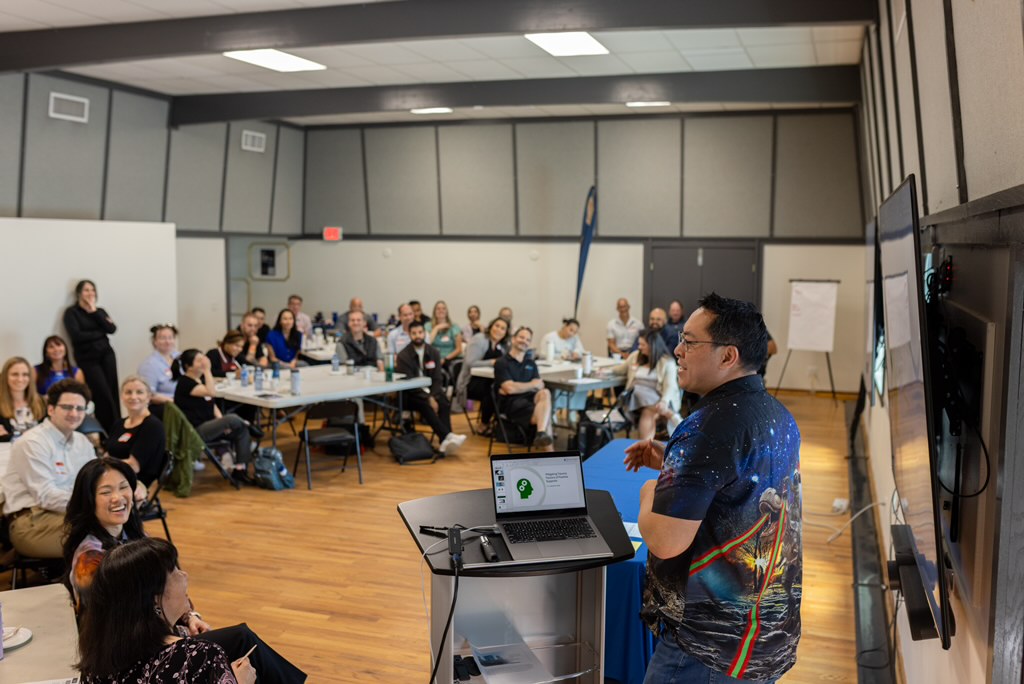
Presently, I am working with HDC in a small group learning space with other physicians around how to improve heart failure care by identifying patients who are not yet receiving guideline directed medical therapy.
In addition, I began mentoring and coaching other physicians. Many were exactly where I had once been: overwhelmed, carrying shame, and unsure where to start. I tell them what I’ve learned: that QI doesn’t require a massive system overhaul. It starts with curiosity. By asking, “What matters to me? What matters to you?” That mindset, over time, builds momentum and guides action.
Alongside this, I’ve made it a personal mission to de-stigmatize wellness support and mental health support among physicians. Too many of us suffer in silence, afraid that seeking help will damage our reputation or career. But the truth is, asking for help made me a way better doctor, not a weaker one.
Quality improvement through the HDC is not a bandage for burnout. It’s a strategic tool that, when paired with a commitment to wellness, can help reshape our experience of practicing medicine. It’s how we move from reacting to redesigning. From coping to creating. From just surviving to shaping the future of care.
If you’re in the dark right now, please know this: it is possible to come back. But the first step isn’t a project or a certificate, it’s giving yourself permission to be human.
In my role as Medical Director for the HDC, I’m happy to have a platform to share my story and encourage others to open up to their teams and prioritize their wellness.

Let’s support each other from “doctor in the dark” to “doctor shining bright”.
Connect with me on LinkedIn where I share more and invite conversation on these topics.
Join HDC Discover and see how our team and tools can change your practice and your approach to medicine.
BC Physician Health Program has a 24 hour/ 7 days a week helpline for confidential, personalized assistance with personal health concerns and professional matters.