By Dr. Lawrence Yang, HDC Medical Director 
In the spirit of continuous improvement, and true to my QI roots, I’m happy to share some personal stories about my journey from ‘Doctor in the Dark’, to ‘Finding the Light’, and to ‘Shining Bright’. This three-part series traces my journey from struggling silently with mental health, to confronting my own biases, to ultimately discovering wellness, meaning, and joy in my work. My goal in sharing is not only to tell my story, but to spark connection, conversation, and support for others walking a similar path.
I hope if you see yourself in parts of these stories, they remind you that even in medicine, vulnerability can be a powerful form of strength. This is Part Two.
When I finally acknowledged that I needed help, I felt unsure what the result would look like. After years of ignoring my own health and well-being, I had grown very disconnected from what my body and mind needed. Seeking support felt unfamiliar and frighteningly vulnerable. But something had shifted in me and for the first time, I allowed myself to consider that there HAD to be another way.
I connected with the Physician Health Program—a lifeline I didn’t know how much I needed. Through them, I began attending counseling and group support sessions. I connected with peers who were also struggling, and suddenly, I wasn’t alone anymore. There’s something profoundly healing about being seen and understood by people who get it—people who’ve stood exactly where you are. I started to suspend judgement towards myself and got more comfortable with vulnerability.
I started on a journey of healing complex unresolved trauma from my childhood. I consider that choice one of the most responsible and impactful medical decisions I’ve made for myself. As the pain of my dactylitis and enthesitis responded to biologic medications and a whole foods diet, I made more reasonable boundaries in my schedule to protect time for being present with my children, my wife, and with myself – time to enjoy sports & hobbies that I loved.
I realized that I needed to develop myself emotionally, relationally, physically, and spiritually. A friend who really cares about me referred me to a personal development program that forced me to really challenge my concepts of self-worth, victimhood, and leadership. I took advantage of the leadership training offered by Doctors of BC including the Physician Quality Improvement (PQI) Initiative.
I realized that much of my suffering was related to me not being courageous enough to advocate for my needs and the needs of my clinic team. I had neglected the critical strategy of networking for the dual purpose of peer support and accelerating resource access for my clinic and my patients.
One tool that surprised me in its impact was breathwork. At first, I was skeptical. It felt it was too “out there,” and on the other hand, it seemed too simple. But I stuck with it, and over time, it became an anchor. Breathing intentionally reminded me to slow down, to check in, and to pause—something I hadn’t allowed myself to do for years.
As I healed emotionally and physically, the background noise in my brain quieted. That buzzing urgency that had kept me up some nights began to soften. My sleep improved. My nervous system became less reactive. I had more patience—with others and with myself.
Of course, not everything I tried was a fit.
I joined a running partnership, thinking that getting active would help. But it turned out I didn’t enjoy running, and forcing myself to keep up with my partner only added pressure. I also experimented with holistic therapies like Reiki and sound baths. While I know these work beautifully for some people, they didn’t resonate with me at the time, and that’s okay. Part of this process was learning what didn’t work and letting it go without a sense of failure.
As I began to reclaim space in my life—emotionally, physically, and mentally—I started noticing something remarkable: my energy returned. Not all at once, but gradually. I could think more clearly. My relationships improved, especially with my family. I had more patience with my kids. I wasn’t always distracted. I was present.
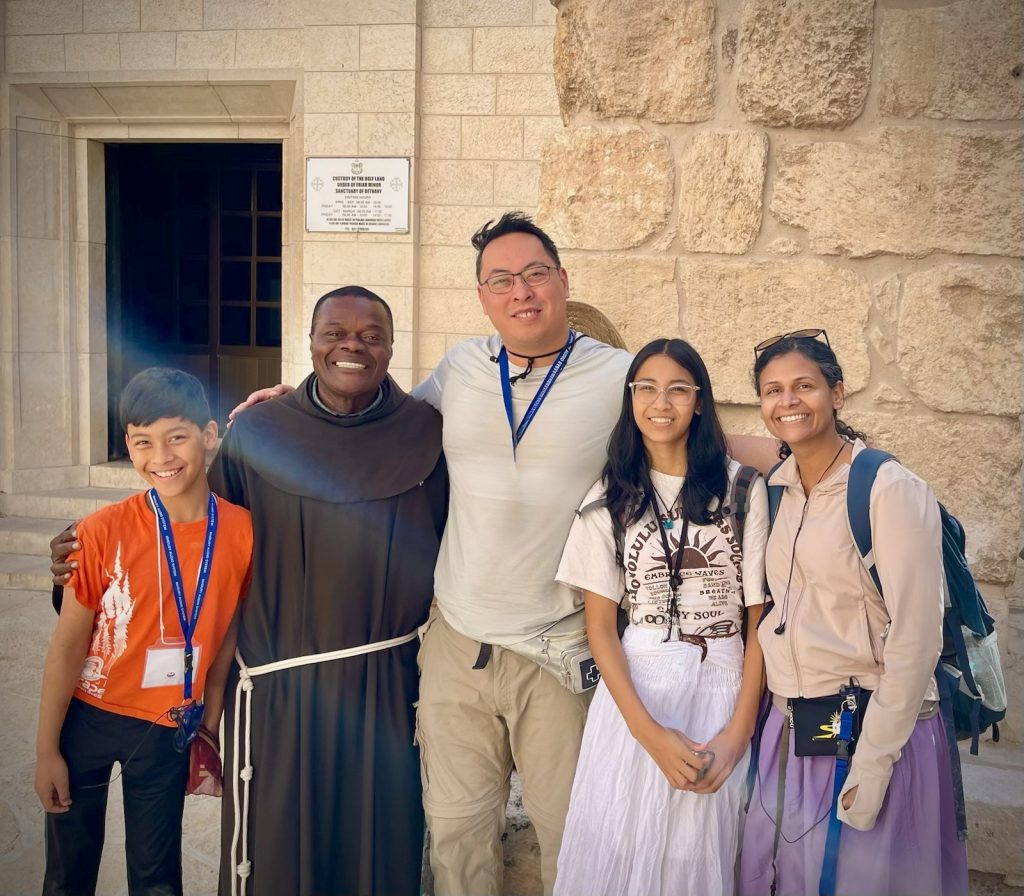
And for the first time in a long time, I felt something I thought I had lost completely: curiosity.
That small spark, that feeling of “what if?” started to grow. I began to imagine what my work might look like if I could approach it differently. What if I didn’t have to carry the entire system on my back? What if I could engage in improving my practice and panel practices, not just surviving it? How could I improve patient care with less administrative burden?
That’s when, with the support of a mentor, Dr. Curt Smecher, and his PQI team in Surrey, I enrolled in the Institute for Healthcare Improvement (IHI) Coaching for Improvement Certificate Program. I didn’t know exactly where it would lead, but the idea of learning how to create positive change, without sacrificing my health, was deeply appealing.
For the first time in years, I wasn’t just reacting to my practice. I was reflecting on it for the purpose of strategic team based action.
That shift—from being buried under my work to stepping back and observing it—was foundational. I started reducing my cognitive load in small but meaningful ways. I streamlined my inbox. I changed how I booked patients. I built in breaks and actually protected them. I learned the courage to ask for help every time my inner voice expressed an inkling of “overwhelm”. These might sound like minor adjustments, but collectively, they created breathing room. I became more and more effective at delegating tasks compassionately in my teams.
It was in that space that quality improvement and practice reflection began to make sense.
Let me be clear: this wasn’t about implementing some grand initiative. It was about asking better questions.
What matters to me?
What matters to my family?
What matters to my clinic team?
What matters to the ward nurses?
What matters to the patients?
How could we make this easier?
What’s working well, and what’s not?
Where would I like to see my practice go?
What are the annoying pebbles in each of our shoes that we, as a team, might remove one by one?
In the past, I wouldn’t have had the capacity to ask these questions, let alone act on them. But healing gave me that WONDERFUL capacity. Wellness made space for my natural creativity. And I was finally ready to use it.

Looking back now, I can see that wellness and Quality Improvement (QI) aren’t separate journeys—they’re intertwined. We need energy, clarity, support, relationality, and optimism to be effective changemakers. And often, that starts with taking care of ourselves – with QI-ing your life.
Contact the Physician Health Program or Advica Health for BC Nurses and Nurse Practitioners if you need support.
In the third and final part of this series (“Shining Bright”), I share how the Health Data Coalition and its app HDC Discover became not only a tool for reducing burnout and administrative load—but a pathway back to autonomy, passion, and purpose in medicine.