By Dr. Lawrence Yang, HDC Medical Director 
In the spirit of continuous improvement, and true to my QI roots, I’m happy to share some personal stories about my journey from ‘Doctor in the Dark’, to ‘Finding the Light’, and to ‘Shining Bright’. This three-part series traces my journey from struggling silently with mental health, to confronting my own biases, to ultimately discovering wellness, meaning, and joy in my work. My goal in sharing is not only to tell my story, but to spark connection, conversation, and support for others walking a similar path.
I hope if you see yourself in parts of these stories, they remind you that even in medicine, vulnerability can be a powerful form of strength. This is Part One.
Before I could even think about quality improvement, looking at my Electronic Medical Record (EMR) practice measures and engaging with the physician-led Health Data Coalition, I had to acknowledge something much more personal: I was unwell.
 Burnout. The word gets tossed around a lot in medicine, but for many physicians, it’s more than just a buzzword. It was my daily reality. Years of pushing through, overextending myself, and ignoring warning signs had finally caught up with me. I wasn’t just tired, I was sick. Migraines, insomnia, acid reflux, fatigue, joint pains, rashes, and an ever-present tightness in my chest had become my norm. But I didn’t have time to deal with it. I had patients to care for, a practice to run, a team to lead.
The truth is, I was operating on fumes, but still expected myself to run like a well-oiled machine. I did not feel like I could shift gears or hand the work over to anyone else.
With hindsight, I realize that I had adopted a “savior complex.” I equated martyrdom with 65+ hour work weeks in the clinic and hospital with excellence – with meaning…with self-worth.
The only path I knew was to work harder, to push my body and mind further. The thought of stepping back from clinical work or seeking help felt like weakness. When the system was already so stretched, it felt wrong to rest. I worked longer hours, took on more patients, stayed late to finish the charts, and answered emails past midnight. I tried to be the doctor who never said “no”.
And yet, I was completely in the dark.
Running a practice is not just about medicine, it’s about business. Billing, staffing, lease negotiations, IT systems, privacy policies; I was running a clinical services corporation that saw over 80,000 patient interactions per year amongst my team. The administrative load was crushing, and the joy and curiosity I once found in patient care began to fade. I was spending 20 hours a week managing the business and 45 hours on patient care. It was too much and my patient care quality was dropping.
How could I possibly improve systems effectively when I couldn’t even get a full night’s sleep? How could I care about wait times or patient flow when I was not properly nourished and cancelling on my own commitments to myself and my family?
When you’re in that place—burned out, overwhelmed, and physically unwell—you don’t have the capacity to think about quality improvement and practice reflection.
My wake-up call came when my body said “no”. I developed flares of autoimmune arthritis, enthesitis, and dactylitis which made walking and carrying things very painful. I felt like I was dying only five years into my practice. I was lucky to find a family doctor who referred me to a rheumatologist. I learned that in my inflamed state, my cardiac risk factors were very high. So I started treatment with biologics and anti-inflammatories and I got a walker. Yes – the ones that a grandpa might use, and I continued to work at the clinic and the hospital with a walker.
In my physical and existential pain, I found myself snappy, threatening my staff when they did not perform to the expectations that I neglected to clearly communicate. I found myself snappy with my children who just wanted to play with me and could not understand why dad was in pain. I found myself snappy with my wife. I am grateful that I realized that something HAD to change.
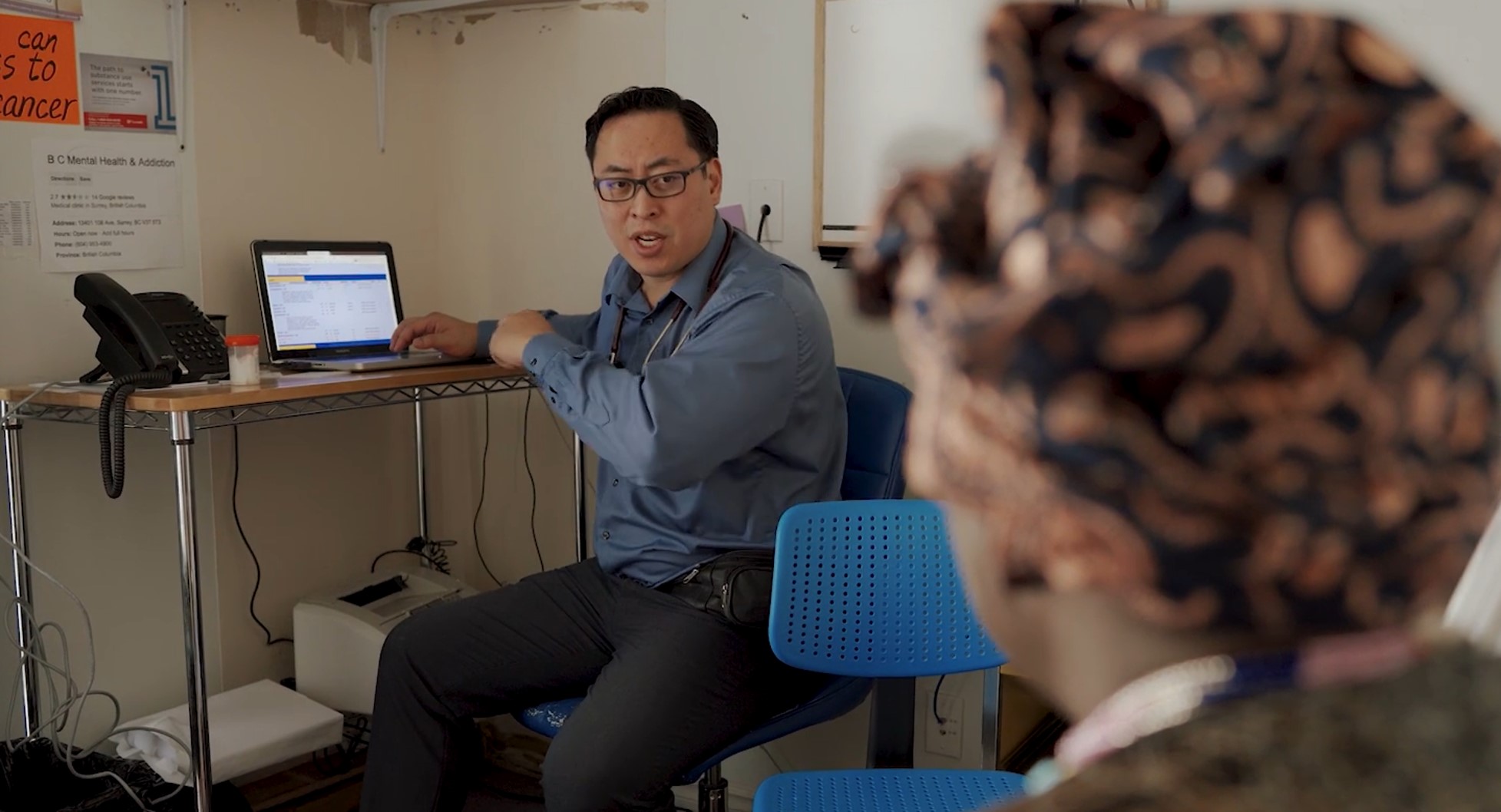
I wasn’t quite ready to change myself, so I decided to focus on my clinic first. For my work woes, I first reached out to the Practice Support Program (PSP) that a colleague referred me to. That call felt very vulnerable at the time, but I now see it as one of the smartest things I’ve done for my career. A PSP coach came to my practice and helped to improve workflows in my clinic. I learned for the first time about the Health Data Coalition (HDC) and that there was a “science” to health systems process improvement and perhaps this is something that could support my administrative burden and bring joy to my work??
I share this story not because I have all the answers, but because I know many others are still in the dark. You don’t need to be on the brink of collapse before you ask for help. And if you’re not ready to think about Quality Improvement (QI), practice measure reflection, or systems change, that’s okay. You can’t improve your practice if you haven’t addressed your own well-being.
My journey toward wellness—and eventually, toward re-engaging with the idea of quality improvement and leaning on the expertise of the HDC team—didn’t happen overnight. But it started with acknowledging that I couldn’t do it all alone. And neither should you. Contact the Physician Health Program or Advica Health for BC Nurses and Nurse Practitioners if the above description of being in the dark resonates with you. Don’t wait. Just connect with them.
In Part Two (“Finding the Light”) I share what helped me begin to heal and what didn’t and invite you to follow along on my journey to embrace how I found autonomy and resilience through practice reflection using HDC Discover.