A Family Physician’s Approach to Continuous Improvement
“I spend 95% of my day being a family doctor and 5% learning to be a better one…“
Dr. Jonathan Kerr,
Family Physician

That five percent, spent reflecting on his own practice, has translated into measurable improvements in patient care, clinic workflows, and environmental impacts. Quality Improvement (QI) in family practice works best when it is simple, practical, and closely tied to everyday care. By focusing on small, meaningful changes—such as adjusting a workflow to take weight/BP on every visit—has led to meaningful results without adding extra workload. These small reflection points allow Dr. Kerr to stay in touch with his practice.
Dr. Jonathan Kerr is a family physician in the Comox Valley on Vancouver Island. In addition to his clinical practice, he brings a background in leadership and coaching that has shaped his approach to continuous improvement. For example, as a Biathlon coach and athlete, he knows that improvement, whether after a win or loss, depends on thoughtful analysis and continuous refinement.
Dr. Kerr sees QI as finding ways to provide even better patient care, reducing healthcare costs and improving work-life balance for doctors and staff. He has learned that through advanced QI training with Brent James (Former Chief Quality Officer and ED, Institute for Healthcare Delivery Research at Intermountain Healthcare) as well as in developing Health Links in Ontario (Integrated patient-centered approach to care designed to enhance and coordinate the health services for patients with multiple chronic conditions and complex needs) in his role as primary care lead for South-Eastern Ontario.
“Setting aside a little bit of time every day to take a step back, be a little reflective, and figure out how I can do even better.”
Planetary Health Project
Within his own practice, Dr. Kerr identified a clear opportunity when reviewing his practice data within HDC Discover. In 2022-23, Dr. Kerr worked with a local PCN Pharmacist to identify patients with COPD or Asthma who could safely switch from metered-dose inhalers (MDIs) to dry powder inhalers (DPIs), which reduced environmental impacts AND often improved patient symptom control. Over the course of the project, his low-carbon prescriptions increased from ~30% to nearly 50%. These results were shared with the Comox Valley Division of Family Practice’s members, and the community ‘ripple’ effect has had positive impacts with other clinics with similar results.
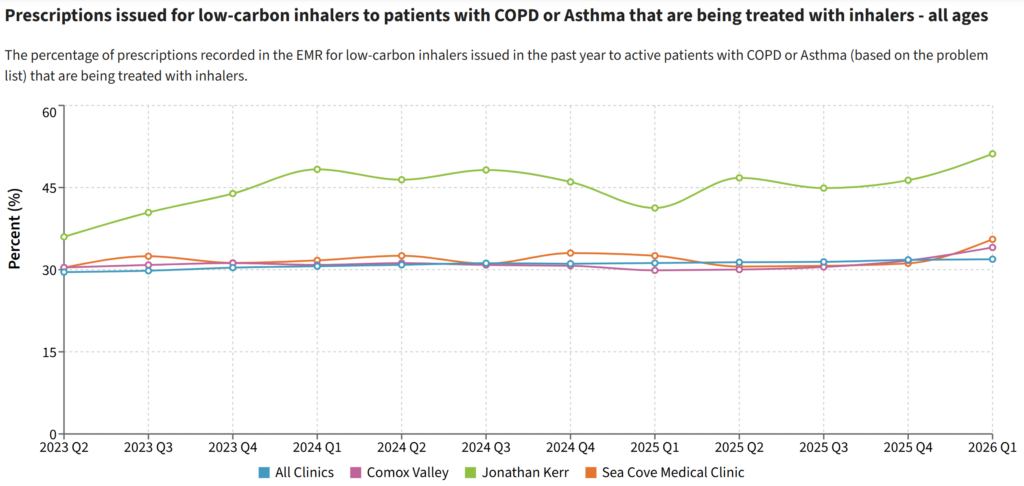
Dr. Kerr used HDC Discover to identify specific areas to focus improvement rather than guessing where to start.
In a subsequent data review session with Kent Marley, Clinical Services Manager from HDC, Dr. Kerr focused on identifying patients with metabolic conditions — including diabetes, hypertension, CKD, CAD/angina, stroke or TIA — who did not have or an up-to-date urine albumin-to-creatinine ratio (uACR) on file for the past 12 months.
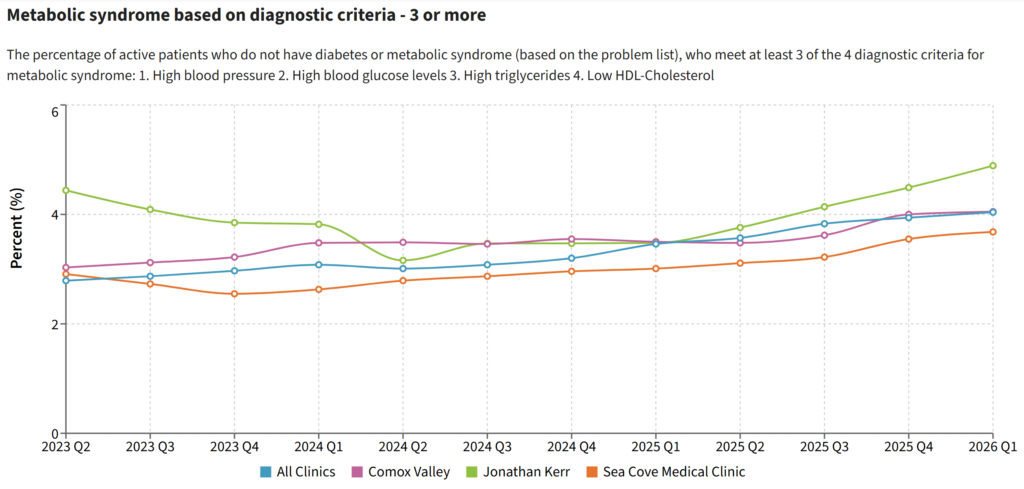
How To with Dr. Kerr
As Dr. Kerr’s experience demonstrates, quality improvement doesn’t require large, overwhelming initiatives — it flourishes through curiosity, reflection, and small, purposeful steps woven into daily practice. By discovering opportunities for growth, family physicians can strengthen patient care, enhance clinic efficiency, and build a culture of continuous learning.
Dr. Kerr recommends the following:
- Start small with manageable projects using PDSA cycles and data analysis.
- Connect with HDC for practice data to identify areas for improvement or starting with a personal area of interest.
- Conduct patient surveys and have staff involved with feedback on a new process.
- Work with a QI coach/mentor to refine projects and gain expertise.
- If working with medical residents, be curious about their QI projects; Is there a QI Pro in your clinic you can coach and support?
- Take a QI Course. Check out the PQI website for some ideas.
QI can be an empowering pathway to better outcomes, improved work-life balance, and more meaningful engagement with patients and colleagues.
“QI is a language… it’s like learning a new sport, learning a new skill. That’s why my approach of 5% daily practice reflection provides a framework of learning and growing.” – Dr. Kerr
Contact info@hdcbc.ca today to get started!